 Ruben Bisso
Case study · Hardware · 2017 to 2021
A light bulb a drone can change, so nobody has to climb.
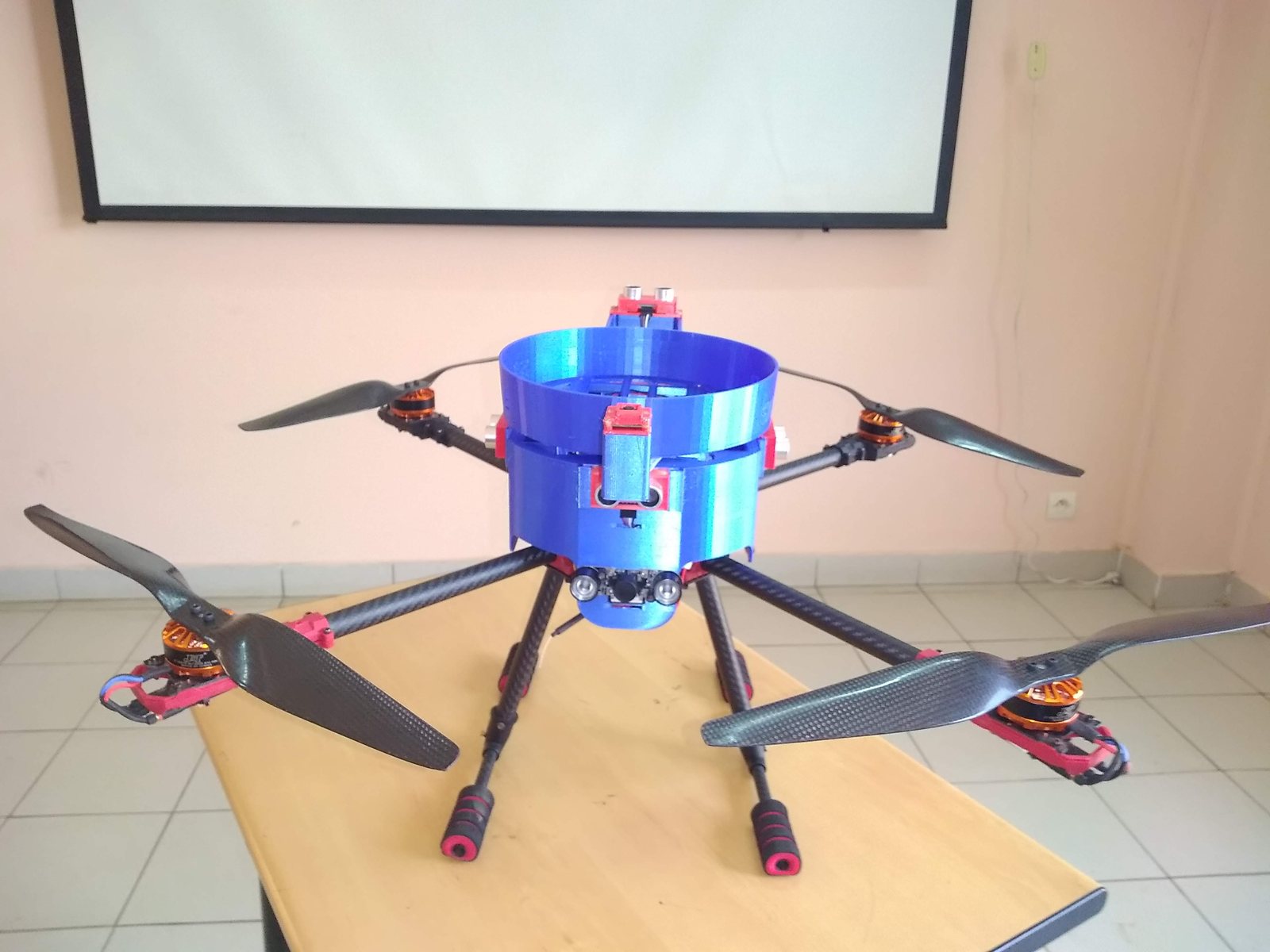
SkyBulb paired a smart LED bulb with a quadcopter and a docking mechanism, so a faulty lamp on a street pole, a church ceiling or a warehouse roof could be swapped from the ground in under two minutes. Built to a working proof of concept with two classmates.
The problem
Falls from height remain the leading cause of fatal workplace accidents, and most of them involve ladders, scaffolds and working platforms. The alternative, an aerial lift, costs $7,000 to $100,000 and needs fuel and maintenance. Anyone who owns a lot of lights high up, a municipality, a factory, a large church, is choosing between danger and expense every time a bulb dies.
The idea
Make the bulb the smart part. A standard-fit LED lamp with a docking collar that a drone can grab, twist and release. The drone flies up, docks, unscrews the dead bulb, comes down, takes a fresh one, flies back and docks again. The owner keeps the drone in-house, the bulbs are consumables replaced every two to five years, and the business is the bulb.
Do not make the drone clever. Make the bulb easy to grab.
What I built
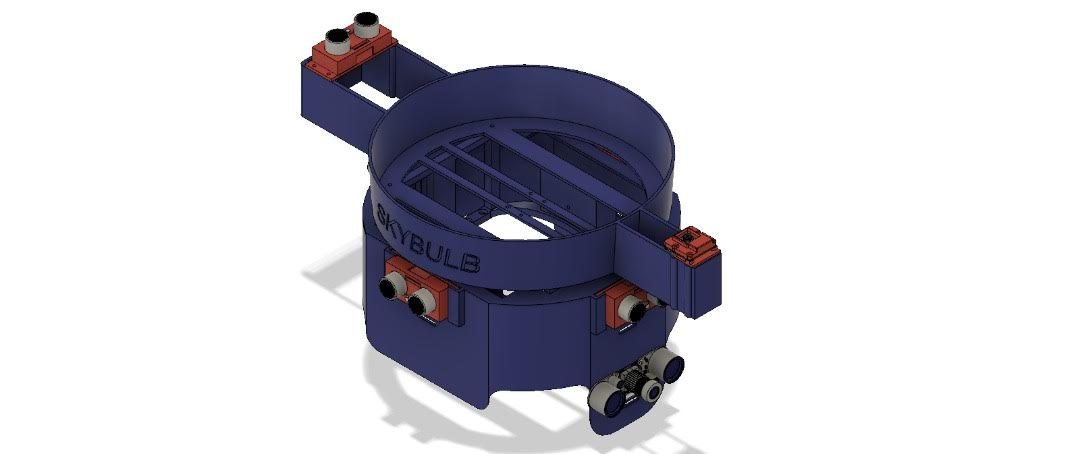
- The docking head. A 3D-printed cylindrical collar on the quadcopter's belly that centres on the bulb, locks, and transmits the twist. Designed in Fusion 360, printed in PLA, iterated on the bench until it docked reliably by hand before it ever flew.
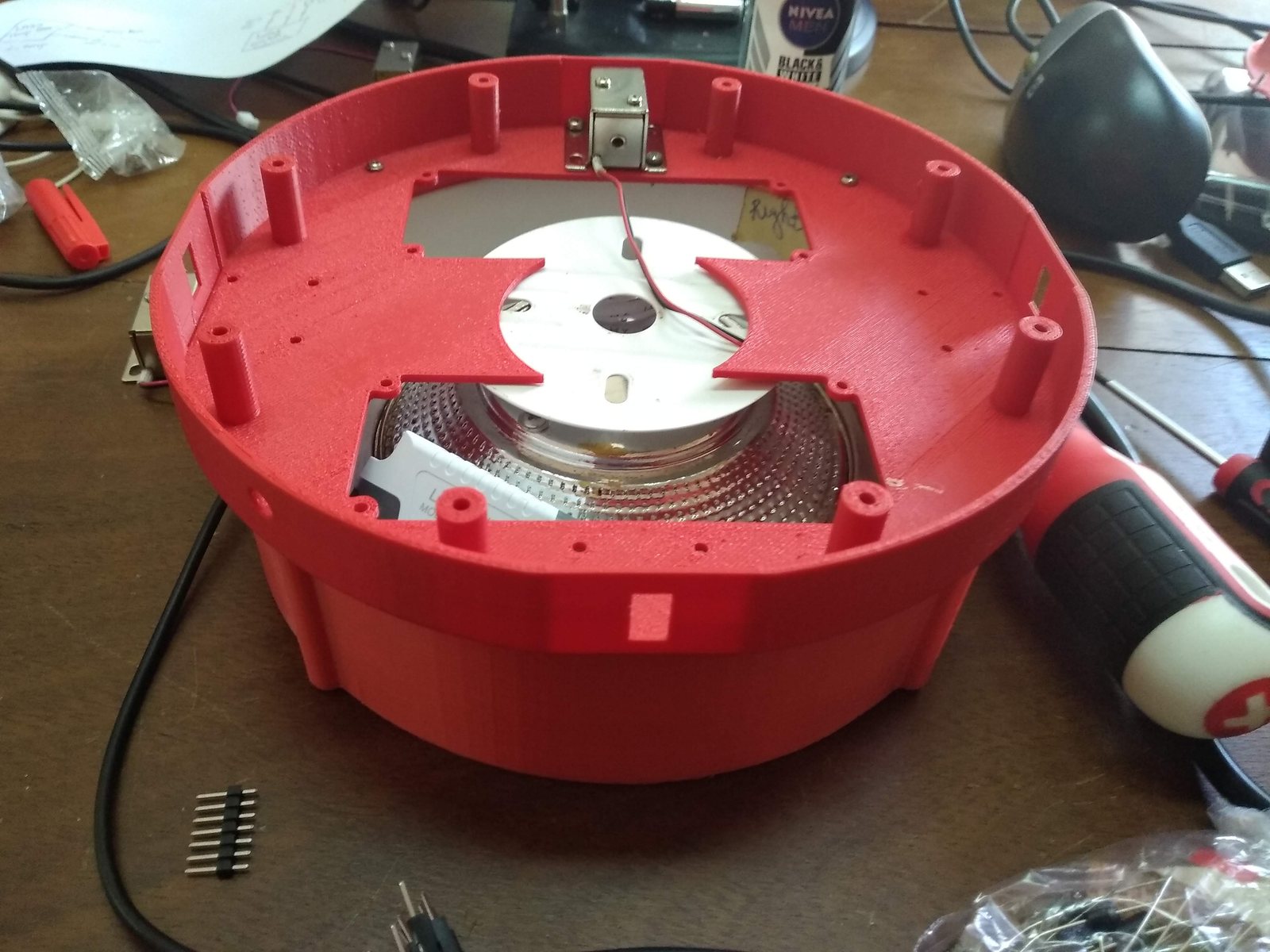
- The bulb housing. A red 3D-printed enclosure with an internal cam that accepts the collar, carries the LED board, and survives being grabbed a few hundred times.
- The airframe. A carbon quadcopter fitted with the docking head, balanced so the mechanism sat on the centre of thrust.
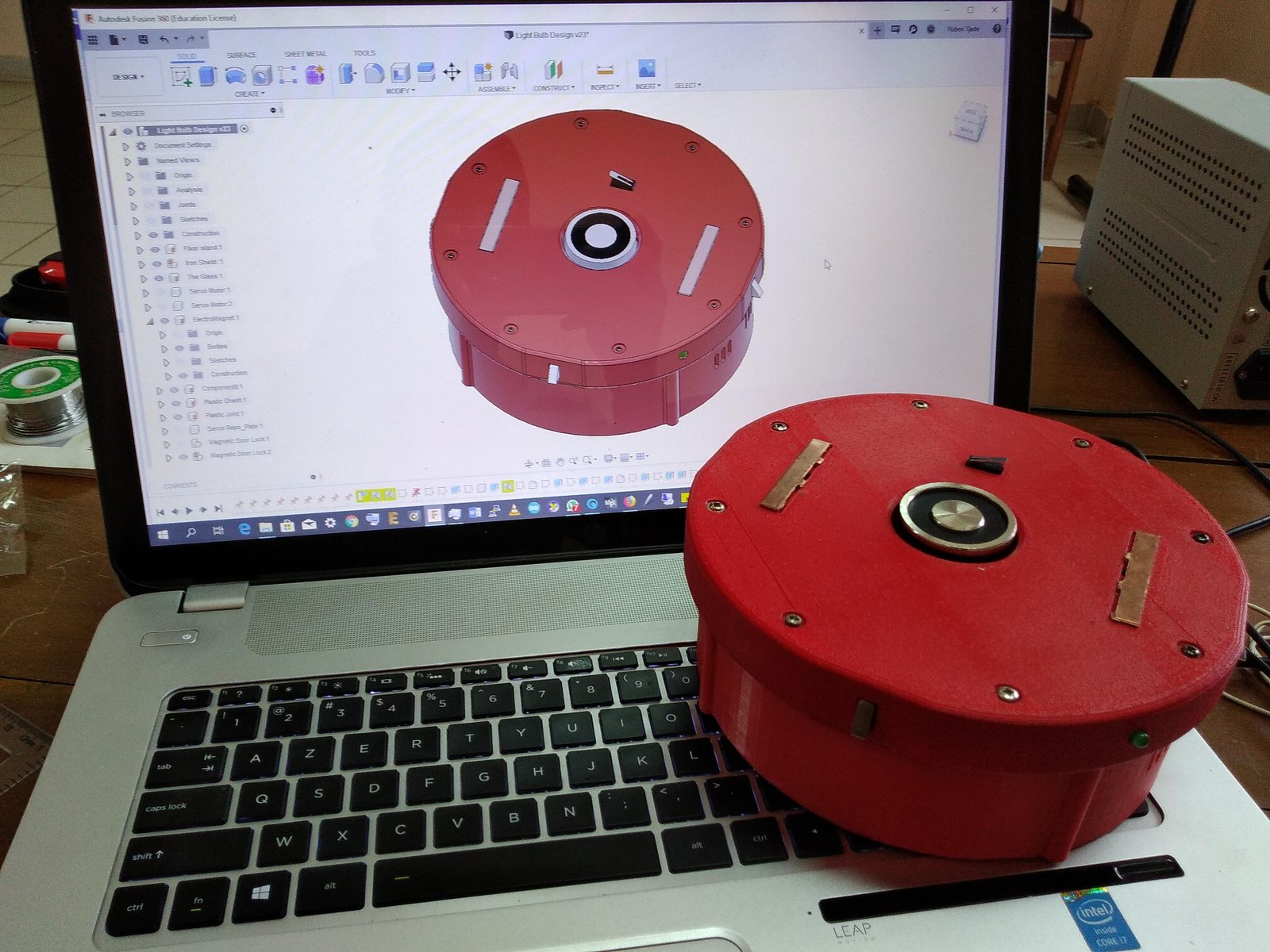
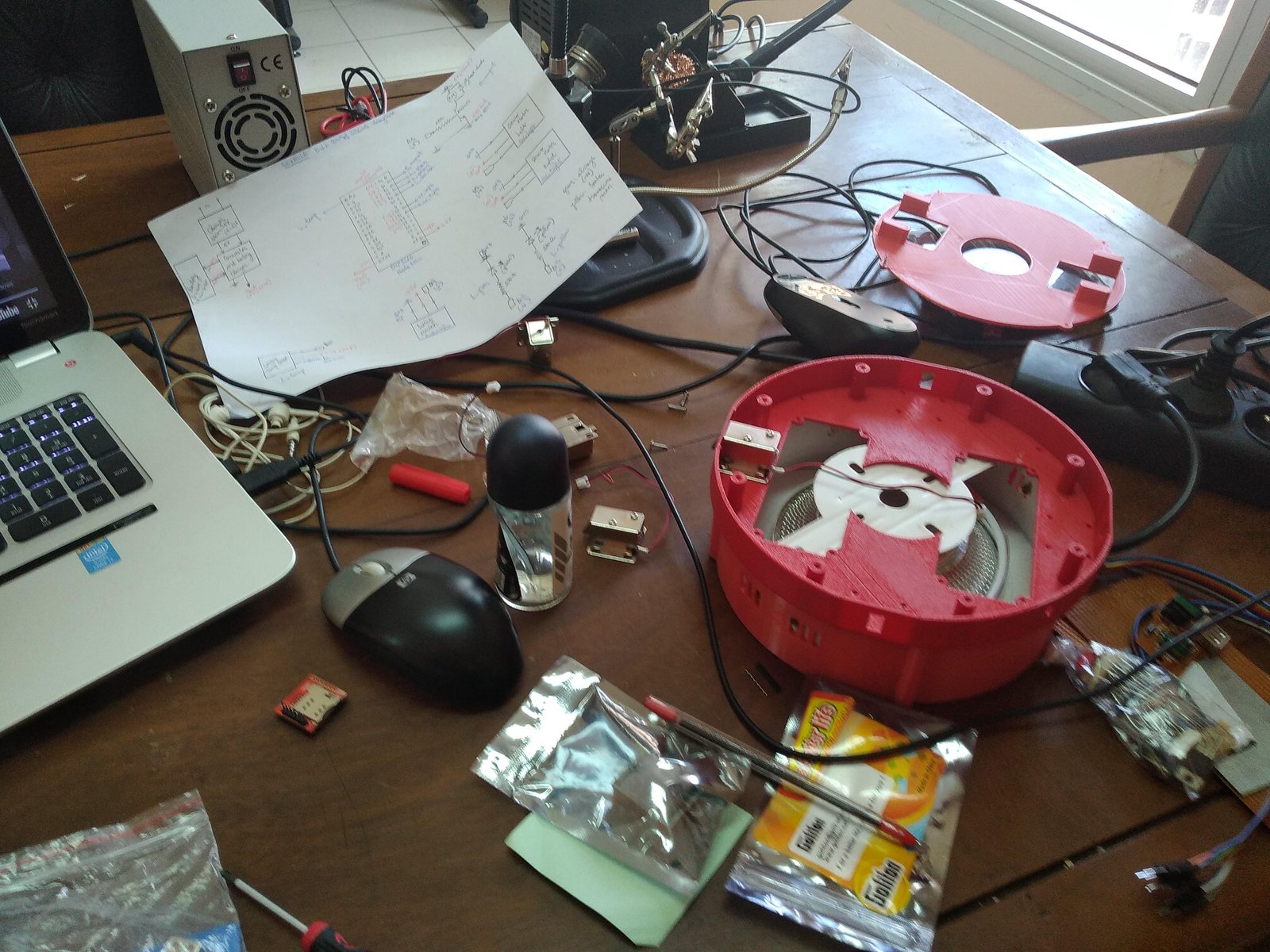
Where it went
SkyBulb was funded from the same 2019 grant that bought my first 3D printer, and built in a student room turned workshop while I was supposed to be attending my last semester. It reached a flown, docked proof of concept and a pitch deck. Then MYGAZ needed all of me, and later I rebranded the idea as ZiBulb under ZITEEF Engineering. It is on hold, not dead: the mechanism works, and the market it targets, LED street and industrial lighting, keeps growing.
What it taught me
This was the project where Fusion 360 became my native language, and where I learned that the hardest part of a robot is rarely the robot. It is the interface between the robot and the world. Every later design, from the MYGAZ enclosure to the ZITEEF organizers, started from that interface and worked backwards.