 Ruben Bisso
Case study · Hardware · 2016 to present
A gas monitor that took five generations and four sensing technologies.
Where I grew up, running out of cooking gas means a trip across town with a 12 kg cylinder, often at night. MYGAZ is a connected device that tells a household how much LPG is left, and tells the distributor when to deliver.
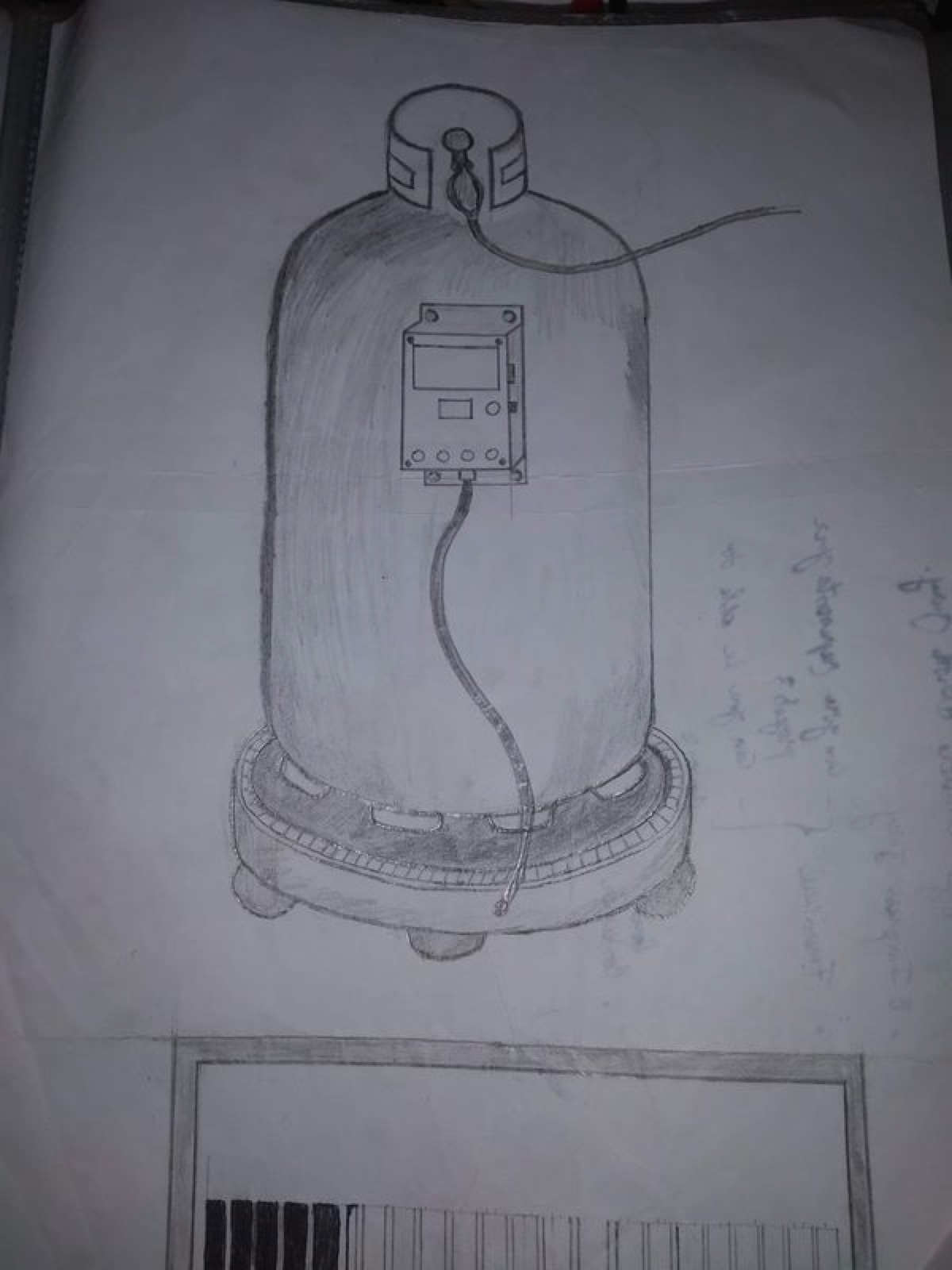
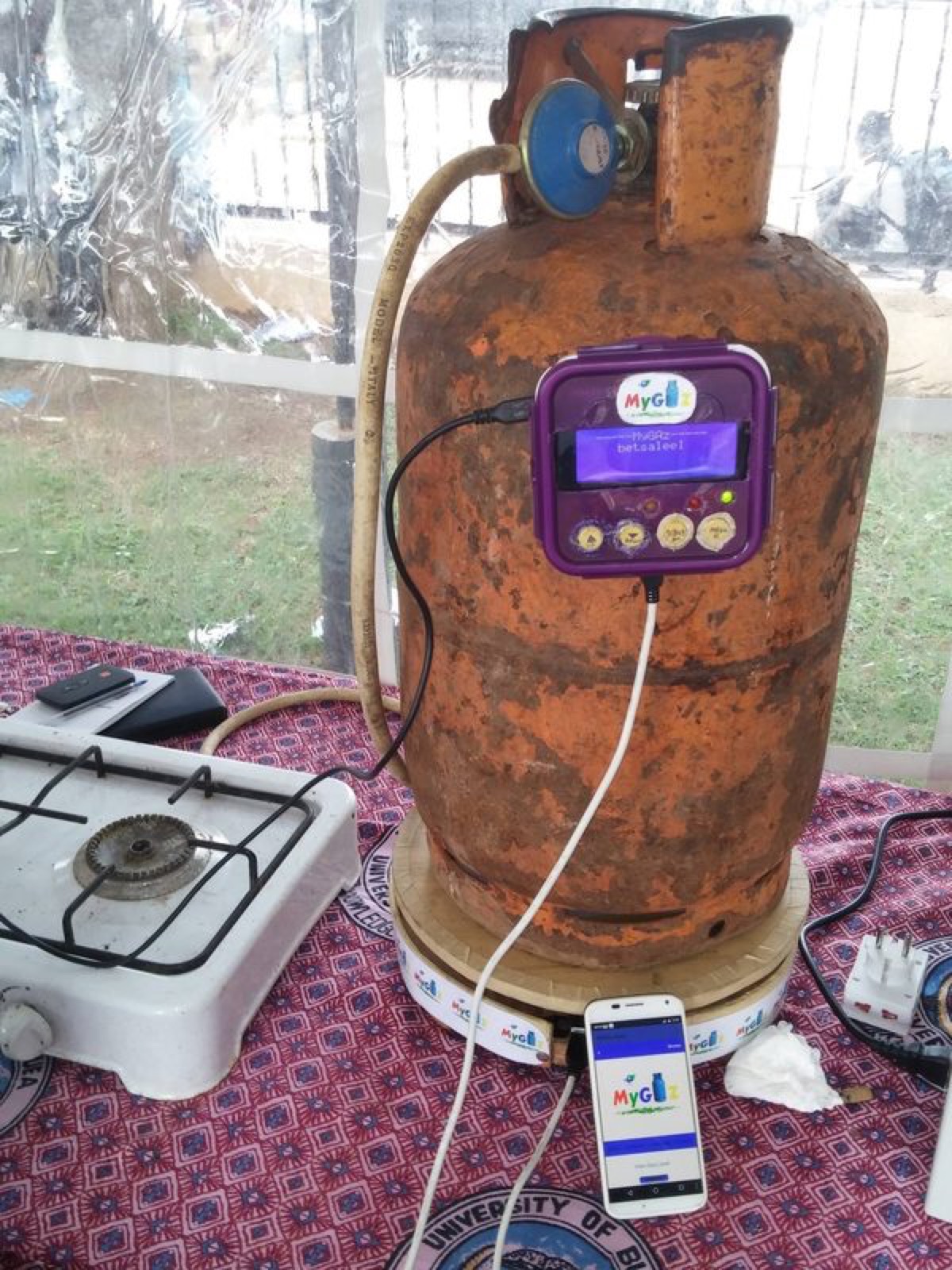
V1, 2017: weight on a wooden base
I had 15,000 FCFA left from my last construction job. After ten hours searching Buea I found a fish-scale dealer with a waterproof load cell and paid 10,000 for it. A carpenter cut a circular base and top plate. Arduino UNO, HX711, an LCD. The sensor showed garbage for days and I nearly gave up. The fix was a single mechanical detail the size of a screw. Ugly, but it worked: put the cylinder on it and read the gas left.
V2, 2018: four body-scale sensors
Funded by a 150,000 FCFA loan from a friend. Four human-scale load cells in a circular arrangement cut the height by 80%. A battery and a gas-leak sensor went inside, which turned out to be very power hungry. First order from China: six packages shipped, three arrived. Lesson learned about free shipping.
V3, 2019: infrared and the first printed enclosure
The TEF-GIZ grant bought a 3D printer and an electronics bench, and a summer at Ongola FabLab taught me Fusion 360. V3 was the first enclosure I designed and printed myself. Infrared sensing did not hold up in the field, but the product finally looked like a product.
V4, 2022: ultrasound, custom PCB, ESP32
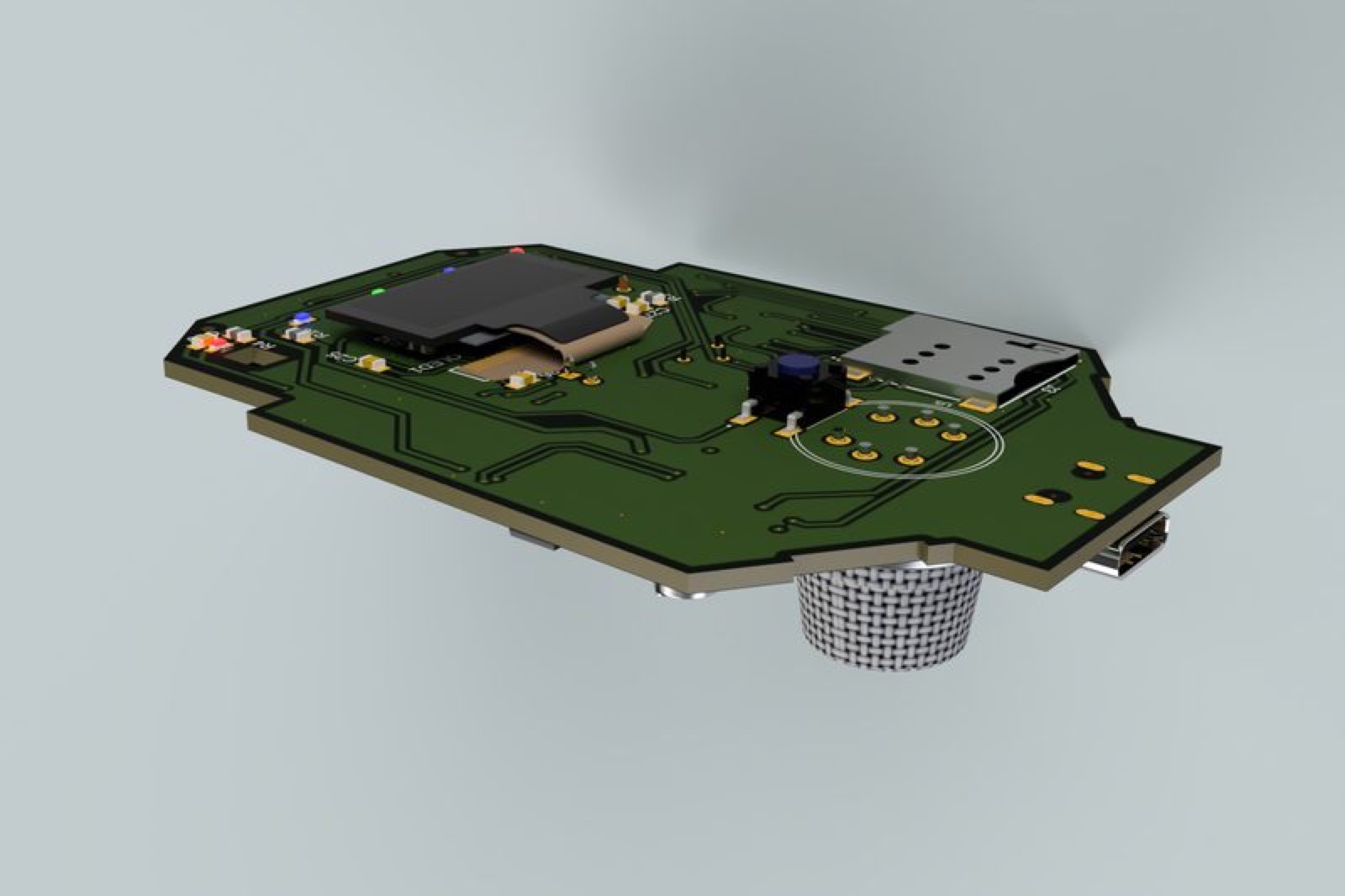
After the 2021 raise, the whole design moved to ultrasound, the technology the industry uses for tank level sensing. Months of R&D went nowhere until the spring of 2022, when the measurement finally stabilised. By August 2022 two units were working: UltraSense, the level monitor, and UltraDetect, the leak detector. Custom PCB laid out in Fusion 360, ESP32 firmware, BLE to a mobile app, enclosures printed on Stratasys PolyJet at the ENSPY 3D center.
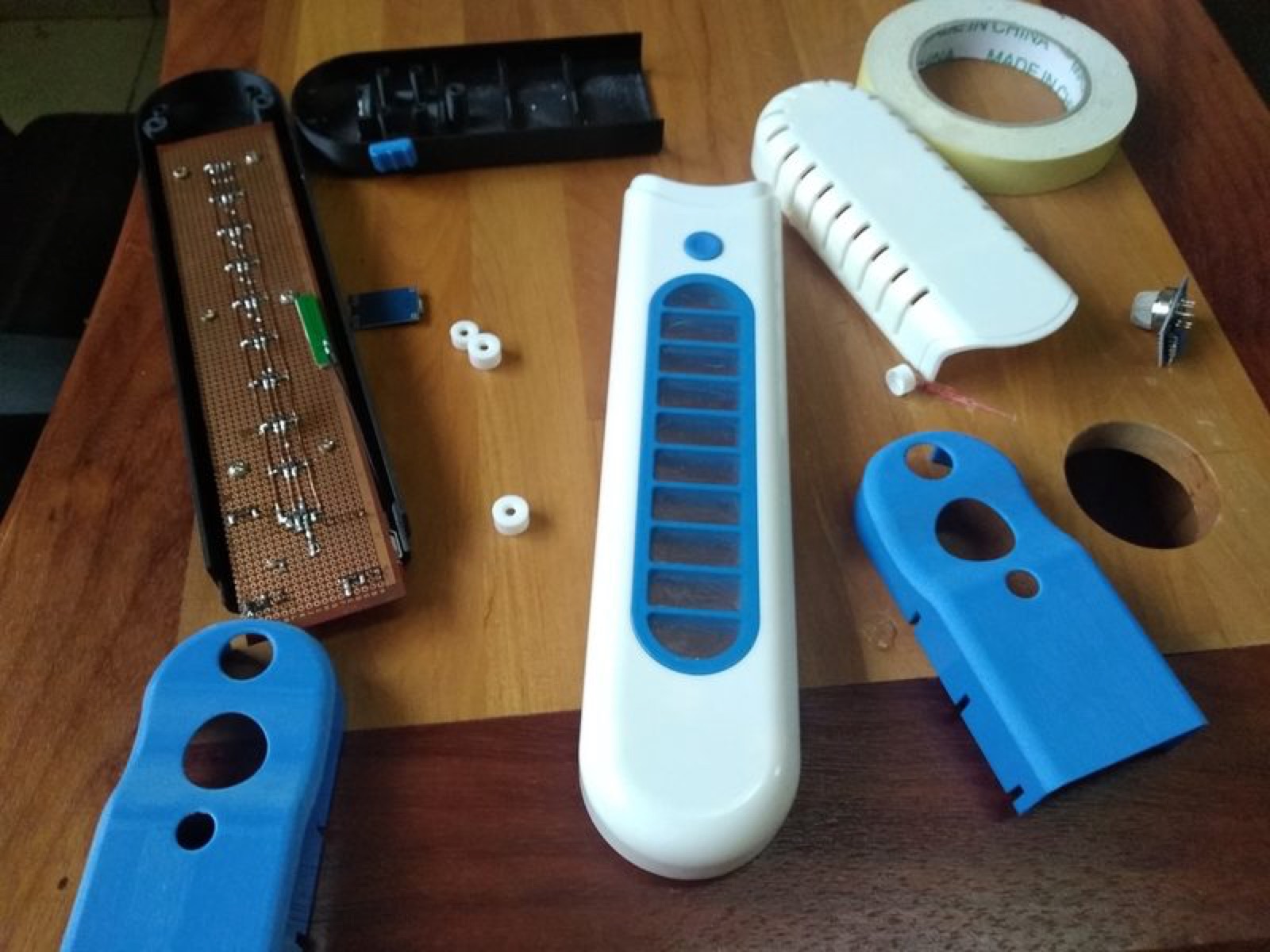
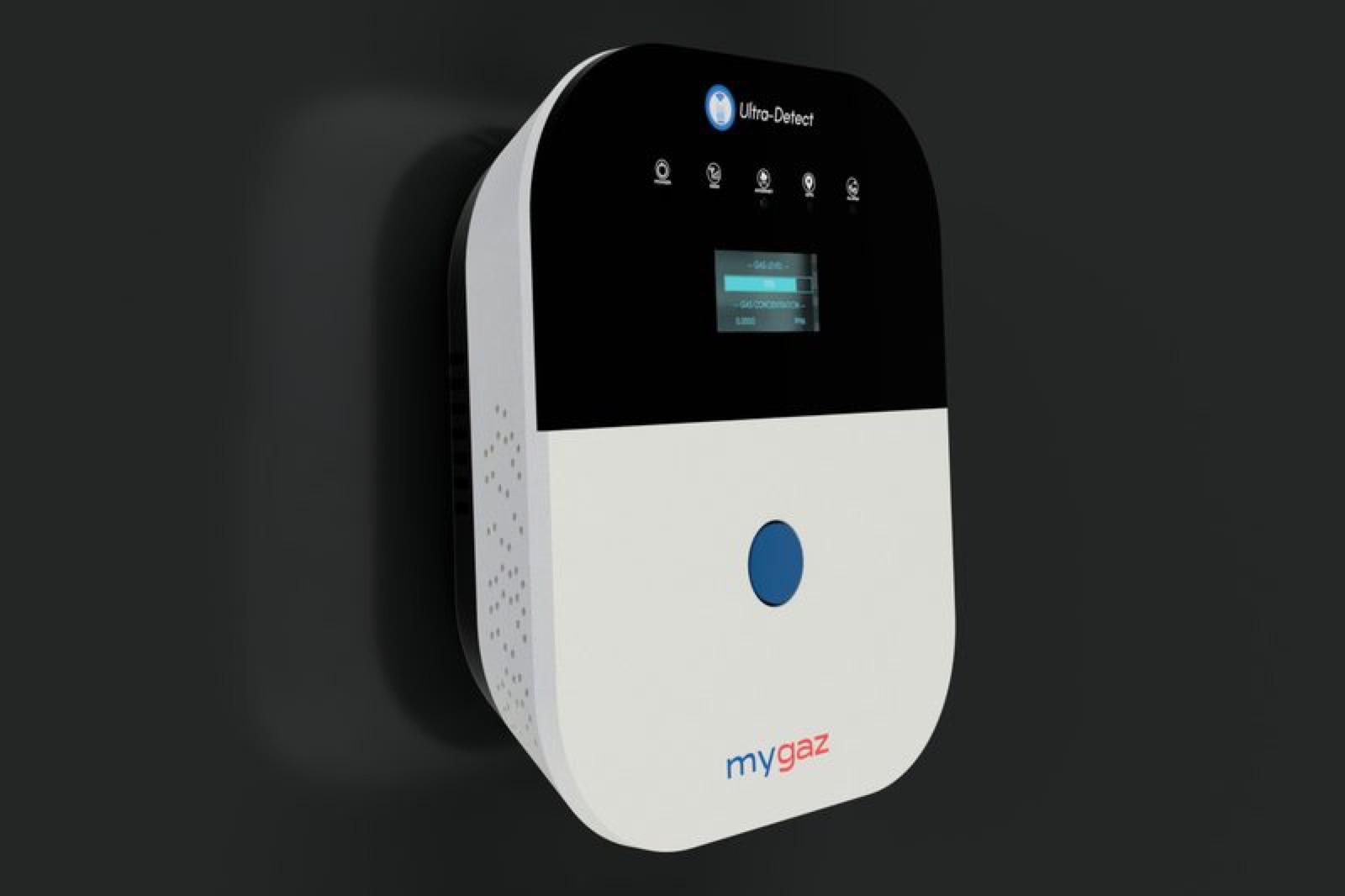
V5 and V06: toward a commercial unit
V5 is the industrial-design concept for the commercial unit. V06 is the production version now in design, with a consumer app, an operator app and a pilot wallet model for the first 25 households and one distribution agency.
Every generation was a bet on a different physics. Four of them lost. The fifth is the product.
What the hardware taught me about software
Hardware punishes silent failure. A sensor that reads plausible but wrong numbers is worse than one that fails outright, because you ship it. That instinct is the same one I bring to agentic systems today: test against real inputs, make failures loud, and never trust a clean 200.